this year marks my third year observing Ramadan, and i always end the month with greater clarity and perspective.
at the end of 2021, i lost my full-time job in philanthropy and was devastated. i fell into a depression. i was sad, overly anxious, and feeling out of sorts. naturally, my eating habits deteriorated.
coupled with the onset of my Saturn Return—the long, non-linear period of simultaneous shedding, growth, and entrée into real adulthood—it felt as if i entered into an unending swamp of general unease, fueled by cheap takeout and fast food runs.
i tried fasting for the first time in 2022 and fell in love with the art of cooking, particularly, as i used it as a means to connect with the childhood favorites my grandmother used to prepare.
the following year, in 2023, i had revelations surrounding my career goals and began studying the history of Arabic civilization. i had lofty dreams of enrolling in a doctoral program, becoming a historian, but decided against…
nonetheless, the month-long fast in 2023 got me closer to what i’m doing now, which is proselytizing the importance of food, foodways, and the eating experience; that’s how Bojepsÿ was born.
before i entered my Saturn Return, i lived in different parts of the Francophone world, and became inspired by the prioritization of the eating experience.
there’s an intentionality behind eating together, or setting a table, that is greater than achieving an aesthetic—even if it is just for a petit solo lunch; it’s preparing the mind and body for an experience.
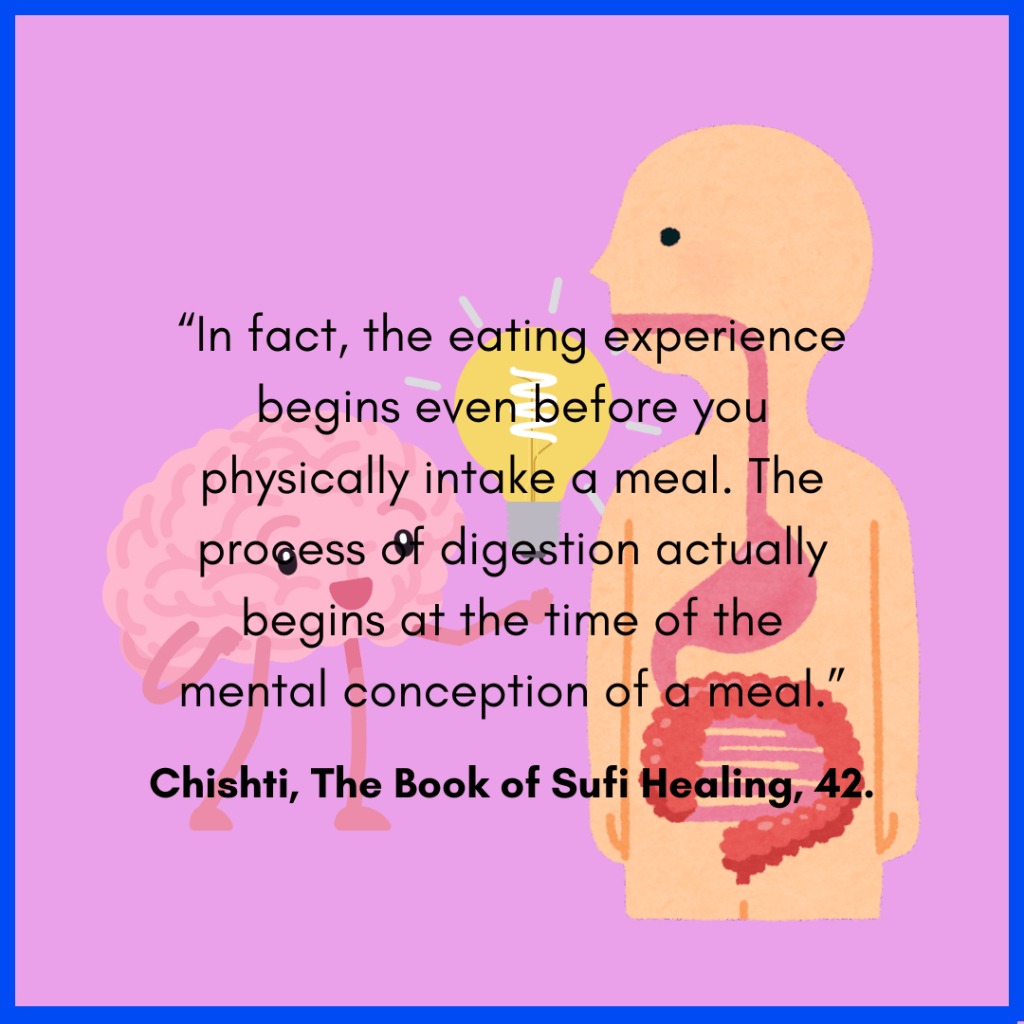
in fact, the eating experience begins even before you physically intake a meal. the process of digestion actually begins at the time of the mental conception of a meal.1
for example, when inhaling a cooking aroma, “the body responds to all of these smells in various ways. as the nose perceives certain odors of cooking, information is delivered to the internal organs that a meal is being readied. the stomach, gallbladder, liver, colon, thyroid gland, and other endocrine glands-all respond in their own ways.”2
hence, when dishes are literally described as “mouthwatering,” chemical responses in the body, as aforementioned, are occurring. and when one is deprived of those initial intake of scents before a meal, some of the most important initial stages of digestion are lost.3
in American culture, we forget just how important the eating experience is, though, since the dawn of human civilization, all of life revolved around mealtime.
during this year’s fast, i was more attuned to how i felt emotionally as i abstained for prolonged periods from eating and drinking. opposed to year’s past, where i relied on simpler dishes, such as soups, to sustain me, this year i focused on adding variety.
incorporating bright, citrusy flavors wherever i could was happenstance. from drinks to desserts and dressings, citrus made an appearance, and i realized, going forward, just how important it is to have something with citrus as part of my everyday dietary pattern. similar to the impact of essential oils, citrus is powerful in stimulating the senses and uplifting the mood.
if you never fasted, i highly recommend trying at least once. it’s a great way to not only cleanse and rid the body of toxins, but to also meditate on your relationship with food…the longest relationship you’ll ever be in.
anyways, i hope this helps.
love & madness,

 Bojepsÿ
Leave a comment